

Nowadays, there are a lot of materials where you can find various tutorials and suggestions on how and what to do when we have arrived home with our new family friend. Each material has something useful and interesting. I have studied a lot of these materials and compiled for myself something like ABC.
As everyone knows, when this new baby comes home, we have to be prepared for sleepless nights, small sharp teeth, destroyed furniture, clothes, shoes and small toilet accidents.
In this blog, I would like to discuss these ABCs, which will help you understand how to prepare yourself and the little one so that everything is established on positive roots.
Home preparation
The arrival of a puppy requires preparation for the whole family. We prepare our house before the arrival of the puppy so that everything goes smoothly and smoothly. What is needed?
Portable cage
Make sure you have a crate that fits your dog's size in which to bring your puppy to his new home, as well as a crate at home if you want to crate train your puppy. I believe that crate training a dog is very necessary to make the dog feel comfortable on trips to the vet, etc. And of course, transporting a dog in a cage is a matter of safety.
Toilet training
Toilet training is one of the most important lessons you teach your puppy, but at the same time, it requires the most preparation and attention.
When going out of the house, you should always have treats with you from the first day, to reward the dog for correct behavior and the behavior we want, in this case - to take care of its needs. Every time the puppy settles, we praise him and reward him with a treat, making the puppy understand that he is a very good dog.
In order for us to succeed, it is imperative to take the puppy outside before every meal, 20 minutes after a meal, before every bedtime and right after bedtime. Depending on the age of the puppy, there should also be a developed toilet plan. What does that mean? We take the puppy to settle every 3 hours, every 4 hours, etc., increasing the time depending on the dog's age and success.
Safe home conditions for the dog
Puppies are curious and everything that is not put aside or hidden is interesting to the puppy.
Always remember:
- Hide cables, wires, etc. Or we ensure that the puppy has no chance to get near the wires.
- We create restrictions on places where puppies should not enter, approach, hide, etc.
- We pick up and put down clothes, shoes, socks, slippers, hair bands, coins and other things that the puppy could eat.
It may sound funny, but many trainers and dog specialists say that in order to provide the safest environment for the puppy, the owner needs to crouch down at the height of the dog and look around at what we see and what objects we see, to make sure that the puppy does not see or come close to something one that could be dangerous to him or important to us.
Cage training
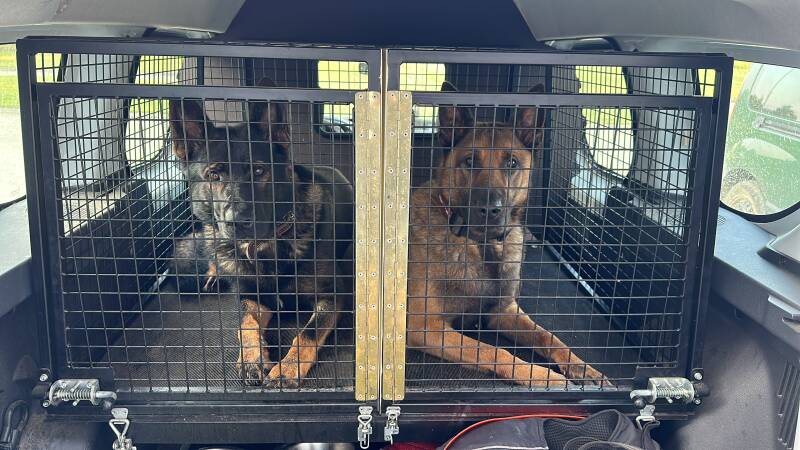
Many dog owners are unaware of cage training and the benefits of a cage in their daily life with their dog. This is currently a very popular trend among dog owners. A crate can help your little one learn how to relax, as the puppy learns that the crate is his place where no one will disturb him and he can rest peacefully. If there are children at home, then the cage can also help the dog to rest from the children. Parents teach children not to touch the dog when he is in his place, and with time, when the dog gets tired, he will even go to his place, because he knows that no one will touch him there.
Cage training will also help a lot in transports. When traveling with a dog, especially abroad, where it is a mandatory requirement in many countries, it will be easier for the dog to feel at ease.
The cage should really be a positive and safe video for your dog, it is not a punishment. The cage should have a water bowl and a comfortable bed or blanket so that the puppy feels comfortable. It is not safe for all dogs to leave water bowls in the cage, but nowadays special bowls have been invented from which it is impossible to spill water.
There are several stages to cage training, how to make a puppy feel comfortable in a cage, but I will tell you about that in another blog.
Sleep tricks
First night with a puppy
As with newborn babies, a new puppy can be difficult when it comes to sleep. But so that you do not torment yourself with sleepless nights, a little preparation will only be good.
How do you help the puppy to sleep well and sweetly?
- Tire your puppy out before bed - Take your puppy for a run so they are pumped up before going to sleep
- Do not feed the puppy 2 hours before bedtime - A puppy with a full pussy means bad sleep for you
- Take the puppy out to relieve himself before going to bed - Take the puppy to the toilet before going to bed.
- Create a comfortable and soft sleeping place for him - Prepare a place for the puppy so that he is comfortable and warm at night. Do not leave the puppy alone in the room, the first nights the puppy should sleep next to your bed so that he does not feel alone. Leave something to chew on in the cage or place so that the puppy can relax a bit at night. If the breeder has given you a blanket, put it in as well, as the familiar smell will reduce stress and anxiety.
- Ignore the crying - You really have to try to ignore the puppy's crying, because the puppy will try to get attention that way at night. The more you support it, the more the crying can start and the longer it can go on. Of course, if the puppy is crying because it wants to go to the toilet, then you need to get the puppy out as soon as possible.
How to tell when it's time for the toilet?
Unfortunately, the puppy is unable to tell you when it's time to take him out, so it's your responsibility to notice when the puppy wants to go outside.
- Yelling, beeping, squeaking - The strong sign that the puppy needs a toilet visit
- After a nap - When a puppy wakes up from a nap, it's only natural that he needs to go relieve himself
- Eating and drinking - after feeding or after watering, you can go outside so that the puppy can take care of its needs, because often puppies are very motivated to relieve themselves after eating
- Game - Toilet - When you are out with your puppy, try to get them to poop. You can create a command that you repeat and reward every time the puppy grooms itself. With time, the puppy will learn that he has to do his needs at this word and will be rewarded for it.
Important!
NEVER get mad at your puppy if he gets into trouble. It is not the puppy's fault that you did not notice his signals or did not take him outside in time. Clean up behind the puppy so that the puppy does not learn to recognize a certain place as its toilet. If the puppy has started grooming in front of your eyes, you try to get the puppy outside as soon as possible, when the puppy has started grooming again immediately praise and reward him.
Feeding
When the puppy comes home it is very important to be aware of the puppy's eating schedule. The sooner the puppy gets used to his schedule, the easier it will be with all the training.
It depends on the dog's age and breed, but mostly it is preferable to feed puppies 3-4 times a day, and preferably after a certain number of hours, so that the dog has a chance to digest everything, for example - 6:00; 12:00; 18:00.
When the puppy has reached the age of 14-18 weeks, feeding changes to 2 meals a day.
It is important to note that the puppy is not given food later than 6:00 p.m., so that his digestive tract is not overburdened during the night.
The puppy must be taught how to wait for his bowl and not let the puppy jump up or try to knock the bowl out of your hands. You can teach your puppy concentration and calmness from an early age, which will be useful later in training.
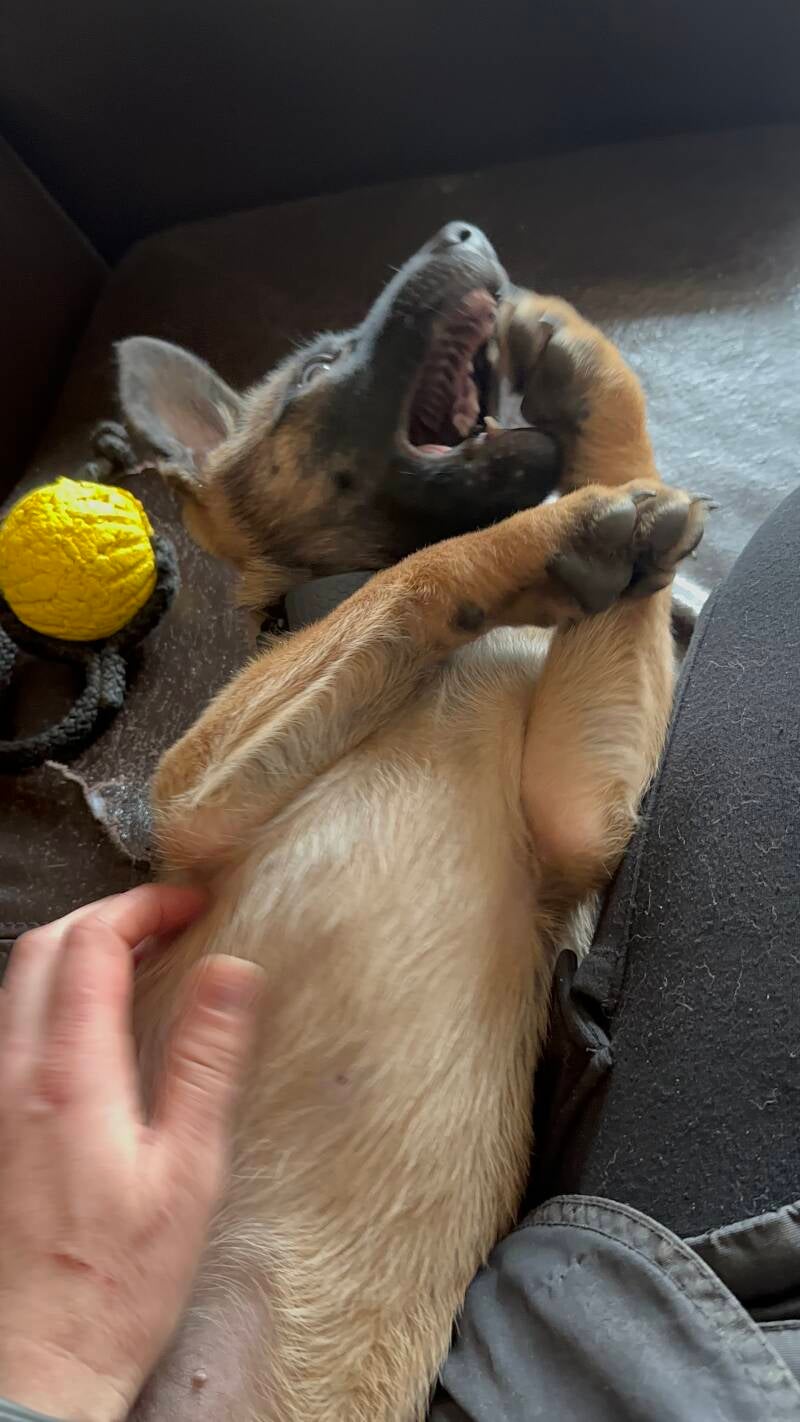
Behavioral problem
Just like small children, puppies can throw tantrums, throw tantrums or just have a bad day. The desire to play very often leads to bad behavior.
Change puppy behavior as soon as possible once the puppy has entered your home, the longer the puppy misbehaves during play or everyday life, the harder it will be to train them.
- Peeing for happiness - this is a problem that tends to happen to young puppies who have not developed control over their bladder. This is caused by overstimulation, extreme excitement when the owner comes home or the puppy is introduced to other people and the puppy is given too much attention.
What to do?
- When you come home, avoid shouting and running to the puppy. Instead, greet the puppy in a very calm and controlled manner and take him outside immediately.
- When the puppy shows too much emotion, use learned commands - sleep or stay. Ignore him until he starts cooperating with you and when the puppy stays calm praise and reward him.
- Separation anxiety - dogs are pack animals, it's important for them to be in their pack and that's why they want to be by your side wherever you go or are. The stress of being alone can lead to a variety of unwanted behaviors.
What to do?
- Gradually increase the time when the dog is left alone - Prepare the puppy in advance that they can be left alone. At first, only for a few seconds, then minutes, etc.
- Change your routine - Dogs are very smart and they can learn your daily routine, so change your habits. Do something different each time, behave differently, etc.
- Make him comfortable - Do everything in your power to make the puppy comfortable. He has his own comfortable place, clothes, various tasks at home that will occupy the puppy while you are away.
- Occupation - The puppy should be occupied while you are out with him, for example in the morning before you leave, when you come home, etc.
This, of course, is not all that can await you in life with a puppy, but at least a little. But every puppy is different, every breed is different and every owner is also different. The owner must be able to create a schedule for their new family member and stick to that schedule in their daily life to ensure a happy life for themselves and the dog.
The main thing is not to give up and not to let go.
Add comment
Comments